2 min read
 2 min
01 · 1 MIN READ
What they have in common
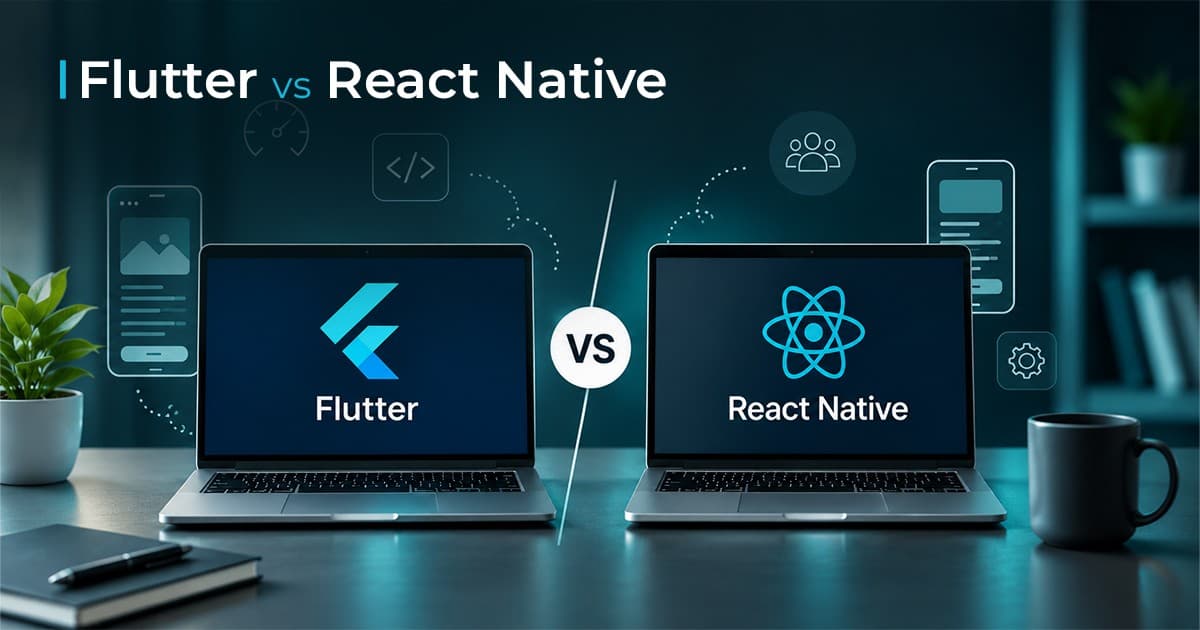
Flutter and React Native are both cross-platform frameworks. You build one codebase, and it runs on iOS and Android.
That matters for your budget. One codebase means one team, one set of features to test, and one set of updates, instead of two separate native apps. For most business apps, that’s the biggest saving available. Our guide to mobile app development cost in India explains how platform choice affects price.
02 · 1 MIN READ
How they differ
The difference is in how each one draws your app on screen.
- Flutter, made by Google, uses the Dart language and draws every pixel itself. Your app looks exactly the same on every phone.
- React Native, made by Meta, uses JavaScript or TypeScript and uses each phone’s own native components. Your app looks and feels like a standard iPhone or Android app.
Think of Flutter as bringing your own furniture, and React Native as using what’s already in the room.
03 · 1 MIN READ
When to choose Flutter
Flutter is usually the better fit when:
- Your app has a strong, custom brand look
- You want it to look identical on iPhone and Android
- The design uses a lot of animation or custom illustration
04 · 1 MIN READ
When to choose React Native
React Native is usually the better fit when:
- Your team or your website already uses React
- You rely on many third-party JavaScript tools and libraries
- You want the app to follow each platform’s own conventions
05 · 1 MIN READ
When to skip both and go native
Some apps are better built separately for each platform. Consider native development if your app depends heavily on device hardware, such as advanced camera features, AR or Bluetooth devices, or if it’s a graphics-heavy game.
For most business apps, though, cross-platform is the right starting point.
06 · 1 MIN READ
Why Miracle Meditation runs on Flutter
Miracle Meditation is a wellness app with daily meditations, affirmations, live sessions and timers. Its look was central to the product: one calm violet palette, custom illustrations and a consistent design system across more than 25 screens.
That made Flutter the natural fit. The iPhone and Android apps come from one Flutter build, and both look exactly as designed.
07 · 1 MIN READ
The choice that matters more
The framework matters less than the team that will maintain your app in year two. New phones, new OS versions and new features all need someone who knows the code.
At Apro IT Solutions, we choose a stack we can defend for the long term, and we explain the reasoning before we build. You can see how we approach app development.
08 · 1 MIN READ
Choose for the app, not the trend
Both frameworks can build an excellent app. Pick the one that fits your design, your team and your plans.
Then build it well.
Not sure which fits your app? Talk to our team and we’ll recommend an approach in writing.